Inicio

Blog

Blog

  • 🧠 AI Is Becoming a Scientist: Google’s “Co-Scientist” Breakthrough and the Future of Scientific Discovery
    May 29, 2026
    Introduction Artificial intelligence is no longer just a tool for data analysis or automation. In 2026, AI is beginning to take on a far more ambitious role — acting as a scientific collaborator. At Google I/O 2026, Google Research revealed a new generation of AI systems, including “Co-Scientist” and ERA (Empirical Research Assistant), designed not just to assist scientists, but to actively generate hypotheses, build models, and accelerate scientific discovery. This marks a major shift in how research is conducted — and raises a critical question: Are we entering an era where AI becomes a true scientific partner? What Is Google’s AI “Co-Scientist”? Google’s Co-Scientist system is an AI-driven research assistant that can: Analyze massive scientific literature databases Generate and rank novel hypotheses Propose experimental directions Assist in computational modeling Support drug discovery and biomedical research According to Google Research leadership, these systems are already being applied to areas such as drug repurposing for cancer and antimicrobial resistance studies. In parallel, ERA (Empirical Research Assistant) focuses on automating computational experiments and model testing, reducing the time required for iterative scientific validation. Why This Breakthrough Matters Traditionally, scientific discovery follows a slow, human-driven pipeline: Literature review Hypothesis generation Experimental design Data collection Validation AI systems like Co-Scientist compress this workflow by automating early-stage reasoning and experimental planning. This could dramatically accelerate research in: 🧬 Drug discovery 🧠 Neuroscience ⚛️ Physics modeling 🌍 Climate science 🧫 Biomedical research In other words, AI is shifting from data processing tools → hypothesis-generating systems. Real-World Impact: From Cancer to Antibiotics One of the most significant implications of this technology is in biomedical research. Google researchers report that AI-assisted systems have already contributed to: Drug repurposing for acute myeloid leukemia Studies in antimicrobial resistance Faster identification of potential therapeutic compounds This aligns with broader industry trends where AI models (including systems like AlphaFold) are transforming how new medicines are discovered. Is AI Replacing Scientists? Despite the dramatic progress, researchers emphasize that AI is not replacing human scientists — at least not yet. Instead, AI is acting as: A “force multiplier” for human creativity and reasoning Scientists still define: Research goals Experimental constraints Ethical boundaries Final interpretation of results However, AI increasingly handles: Hypothesis generation Literature synthesis Pattern discovery Simulation and modeling This creates a new research paradigm: Human + AI co-discovery. The Rise of “Autonomous Science” Google’s Co-Scientist is part of a broader movement toward autonomous scientific systems, sometimes called: Self-driving laboratories AI research agents Closed-loop discovery systems In these systems, AI not only proposes ideas but also iteratively refines them based on experimental feedback. Some researchers believe this could eventually lead to: Fully automated discovery pipelines where AI runs end-to-end research cycles Challenges and Concerns Despite the excitement, several challenges remain: 1. Scientific Reliability AI-generated hypotheses must still be rigorously validated. 2. Transparency Understanding why AI proposes certain ideas is still difficult. 3. Research Bias AI models may inherit biases from training data. 4. Scientific Ownership Who owns an AI-generated discovery? These issues will shape the next decade of AI governance in science. The Future: AI as a Scientific Partner The emergence of AI Co-Scientist systems suggests a fundamental shift in scientific methodology. Instead of replacing scientists, AI is becoming: A hypothesis generator A simulation engine A literature analyst A research accelerator This evolution may lead to a new era of discovery where breakthroughs happen faster than ever before. Conclusion The introduction of AI Co-Scientist systems marks one of the most important developments in modern research. We are moving toward a future where: Scientific discovery is no longer purely human — but a collaboration between humans and intelligent machines. The question is no longer whether AI will transform science, but how quickly we can adapt to this new research ecosystem.
    LEER MÁS
  • Scientists Discover a “Switch” That Supercharges T Cells Against Cancer Scientists Discover a “Switch” That Supercharges T Cells Against Cancer
    Apr 14, 2026
    Introduction: A New Lever in the Fight Against Cancer Cancer immunotherapy has already transformed oncology by harnessing the body’s own immune system. Yet, one major limitation persists: T cells—our primary anti-tumor warriors—often become exhausted, suppressed, or metabolically inefficient inside tumors. A new study published in 2026 introduces a strikingly simple yet powerful concept:👉 Block a single protein, and T cells become dramatically more potent. Specifically, researchers found that inhibiting a mitochondrial protein called Ant2 can reprogram T cell metabolism, making them stronger, more durable, and far more effective at killing cancer cells. The Core Discovery: Rewiring T Cells from the Inside At the heart of this breakthrough is metabolic reprogramming—a concept gaining rapid traction in immunotherapy. What happens when Ant2 is blocked? T cells shift how they generate energy Mitochondrial activity is reprogrammed Cells become: More persistent More proliferative More cytotoxic (better at killing tumors) Researchers describe this as turning T cells into a “high-performance mode” state. This is fundamentally different from many existing therapies—it doesn’t just “activate” T cells, it re-engineers their internal power system. Why This Is a “Game Changer” 1. It Targets the Root of T Cell Failure Tumors don’t just hide—they actively suppress immune cells. For example: Proteins like PD-1/PD-L1 act as “brakes” on T cells Tumor environments are nutrient-poor and metabolically hostile 👉 Traditional checkpoint inhibitors remove inhibitory signals.👉 This new strategy makes T cells intrinsically stronger, even in hostile environments. 2. A Complement, Not a Replacement This approach could synergize with existing therapies, including: Checkpoint inhibitors (PD-1, CTLA-4) CAR-T cell therapy Cancer vaccines For instance: CAR-T therapy has shown ~40% survival improvement in solid tumor trials Yet many patients still fail to respond due to T cell exhaustion 👉 Metabolic reprogramming could boost response rates across therapies 3. Simplicity with Broad Potential Unlike complex genetic engineering: This strategy focuses on one protein target Potentially easier to translate into drug development This mirrors successful approaches like: Blocking TIGIT or PD-1 pathways to restore immune activity Mechanism Deep Dive (Perfect for Scientific Illustration)     Step-by-Step Mechanism: Ant2 inhibition↓ Mitochondrial energy pathway disruption↓ Metabolic rewiring (shift in ATP production)↓ Enhanced T cell fitness Increased proliferation Improved survival Stronger tumor targeting↓ Improved tumor clearance This layered mechanism makes it ideal for high-impact scientific illustrations, especially for: Journal covers Grant proposals Immunology presentations Supporting Context: The Bigger Immunotherapy Landscape This discovery fits into a broader trend: From “Unlocking” to “Upgrading” T Cells Historically: Immunotherapy = removing brakes (checkpoint inhibitors) Now: Focus is shifting toward enhancing intrinsic T cell biology Examples include: Targeting metabolic checkpoints Engineering T cell receptors Modifying tumor recognition pathways Challenges Ahead Despite its promise, several questions remain: Safety: Could hyperactive T cells damage healthy tissue? Translation: Will this work in human patients, not just lab models? Durability: How long do the enhanced effects last? These are common hurdles in immunotherapy, where only a subset of patients currently benefit from existing treatments. Conclusion: A New Era of Immune Engineering Blocking a single protein to supercharge T cells represents more than a discovery—it signals a paradigm shift: From externally controlling immune responses → to internally upgrading immune cells If successfully translated into therapies, this approach could: Improve response rates Overcome resistance Expand immunotherapy to more cancer types In short, it has all the hallmarks of a true next-generation cancer treatment strategy.
    LEER MÁS
  • Microplastics Mystery Solved? Study Reveals Land Emits 20× More Than Oceans Microplastics Mystery Solved? Study Reveals Land Emits 20× More Than Oceans
    Apr 16, 2026
    Introduction: A Major Miscalculation in Microplastic Pollution For years, scientists believed that oceans were the primary source of airborne microplastics. However, a groundbreaking new study has upended this assumption—revealing that land-based sources may emit over 20 times more microplastic particles into the atmosphere than oceans.     This discovery not only challenges long-standing scientific models but also raises critical questions about global pollution pathways, policy priorities, and human exposure risks. What Are Microplastics—and Why Airborne Sources Matter? Microplastics are tiny plastic particles (less than 5 mm in size) generated either directly (e.g., microbeads) or through the breakdown of larger plastics like bottles, tires, and textiles. While traditionally studied in oceans and soils, recent research shows that microplastics are also widespread in the atmosphere, capable of traveling long distances and reaching even remote regions like mountains and polar areas. Airborne microplastics matter because they: Can be inhaled by humans and animals Act as global pollution carriers Deposit back into ecosystems, contaminating soil and water cycles The Breakthrough Study: 20× Misjudgment of Sources A 2026 study published in Nature combined 2,700+ global measurements with atmospheric modeling to reassess microplastic emissions. Key Findings: Land emits over 20× more microplastic particles than oceans Previous models significantly overestimated total atmospheric concentrations Land-based emissions may reach ~600 quadrillion particles annually This means earlier research may have misidentified the dominant source of airborne microplastics, potentially skewing environmental strategies for years. Where Do Airborne Microplastics Really Come From?   1. Urban and Industrial Sources Tire wear from vehicles (a major contributor in cities) Construction dust and degraded plastics Industrial emissions In urban Europe, studies show tire particles can account for over 90% of airborne microplastic mass in some areas. 2. Textiles and Household Materials Synthetic clothing fibers released during wear and washing Indoor sources like carpets, furniture, and plastic goods Indoor environments can contain hundreds of microplastic particles per cubic meter, making them a major exposure zone. 3. Resuspension from Land Surfaces Previously deposited plastics in soil and dust can be re-lifted into the air by wind, creating a continuous pollution cycle. Global Transport: A Hidden Pollution Network One of the most alarming insights is how microplastics move globally: Carried by atmospheric currents across continents Deposited into oceans, forests, and agricultural land Detected in remote regions far from pollution sources This confirms that microplastic pollution is not local—it is planetary. Health Implications: An Invisible Risk Emerging evidence suggests that airborne microplastics may pose serious health risks: Humans may inhale tens of thousands of particles daily Particles can penetrate deep into the lungs and bloodstream Linked to respiratory issues, inflammation, and potential long-term diseases Although research is still evolving, the shift toward airborne exposure highlights a previously underestimated pathway of human risk. Policy Implications: Rethinking Environmental Strategy This new understanding has major consequences for environmental policy: 1. Shift Focus from Ocean Cleanup to Land-Based Prevention If land is the dominant source, policies must prioritize: Reducing tire wear emissions Regulating synthetic textiles Controlling urban dust and industrial waste 2. Improve Monitoring Systems The study highlights inconsistencies in measurement methods, calling for: Standardized global monitoring networks Better detection technologies for smaller particles 3. Integrate Air Pollution and Plastic Policy Microplastics should be treated not just as waste—but as airborne pollutants, linking plastic regulation with air quality standards. Case Study: Urban vs Remote Pollution In cities like Oslo or London, microplastic concentrations are significantly higher due to traffic and dense human activity Yet even remote environments show contamination, proving long-range atmospheric transport This dual pattern underscores the need for both local mitigation and global cooperation. The Bigger Picture: A Systemic Environmental Challenge This study doesn’t eliminate the microplastic crisis—it reframes it. While earlier estimates may have overstated some quantities, the reality is clear: Microplastics are everywhere—in air, water, and soil Their sources are more complex than previously thought Their impacts are still not fully understood Conclusion: From Misunderstanding to Action The “microplastics mystery” is far from fully solved—but this research marks a critical step forward. By revealing that airborne microplastics originate primarily from land—and at far greater levels than expected— it forces a rethink of how we approach pollution, from scientific models to global policy. The next challenge is clear: 👉 Shift from measuring the problem to actively reducing it at its source.
    LEER MÁS
  • World’s Smallest QR Code: How Nanotechnology Is Redefining Data Storage World’s Smallest QR Code: How Nanotechnology Is Redefining Data Storage
    Apr 09, 2026
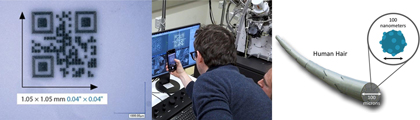
    🔬 A Code Smaller Than a Human Hair Imagine scanning a QR code so small it’s invisible to the naked eye—thinner than a strand of human hair. Recent breakthroughs in nanotechnology and microfabrication have made this possible, pushing the limits of how we store, encode, and retrieve information. Researchers have successfully created nano-scale QR codes using advanced lithography techniques, achieving structures measured in micrometers and even nanometers. For context, a human hair is typically 70–100 micrometers wide—meaning these QR codes can be hundreds of times smaller.     ⚙️ How Do You Even Build a Nano QR Code? Creating such ultra-small structures requires cutting-edge fabrication technologies, including: Electron Beam Lithography (EBL)Uses focused electron beams to “write” patterns at nanometer precision. Focused Ion Beam (FIB) MillingPrecisely carves materials at the atomic scale. Nanoimprint Lithography (NIL)Enables scalable replication of nano-patterns. These methods allow engineers to encode QR patterns into surfaces like silicon wafers, metals, or polymers, maintaining readability under high-resolution imaging systems such as scanning electron microscopes (SEM). 📊 Real-World Data & Scientific Context This isn’t just a lab curiosity—it builds on a broader trend in ultra-dense data storage: Researchers have demonstrated DNA-based data storage with densities up to 215 petabytes per gram. In 2023, teams achieved nanoscale optical storage using structured light, breaking traditional diffraction limits. Semiconductor industries already operate at single-digit nanometer nodes, proving the feasibility of mass production at this scale. In comparison, nano QR codes represent a bridge between physical encoding and machine-readable data, combining visual structure with extreme miniaturization. 🌐 Why This Matters: Beyond Just Tiny Codes 1. Next-Generation Data Storage Nano QR codes could encode information directly onto materials—turning any surface into a data carrier. 2. Anti-Counterfeiting & Security Because they are nearly impossible to replicate without specialized equipment, nano QR codes can serve as invisible authentication tags for: Pharmaceuticals Luxury goods Semiconductor components 3. Biomedical Applications Imagine embedding microscopic QR codes on medical implants or drug carriers, enabling: Real-time tracking Smart diagnostics Personalized medicine 4. Art Meets Science (Visual Impact 🎨) These structures are not only functional—they’re visually striking under magnification, making them ideal for: Scientific illustration Journal covers High-impact visual storytelling 🚧 Challenges to Overcome Despite the promise, several hurdles remain: Readability: Requires specialized imaging tools (not smartphone cameras—yet). Scalability: High-precision fabrication can be costly. Durability: Nano-patterns must withstand environmental wear. However, as imaging and fabrication technologies evolve, these limitations are expected to shrink—just like the QR codes themselves. 💡 Final Thought: When Data Becomes Invisible We are entering an era where information is no longer just stored—it is embedded, hidden, and seamlessly integrated into the material world. The world’s smallest QR code is more than a technical achievement.It’s a signal of a future where: Data lives everywhere—on every surface, at every scale.
    LEER MÁS
  • Asteroid Discovery Shock: Scientists Find All 5 DNA Bases in Space – What It Means for the Origins of Life Asteroid Discovery Shock: Scientists Find All 5 DNA Bases in Space – What It Means for the Origins of Life
    Apr 07, 2026
    🚀 A Cosmic Breakthrough That Changes Everything In a discovery that is reshaping our understanding of life’s origins, scientists have identified all five nucleobases—the fundamental “letters” of DNA and RNA—in asteroid samples. This finding suggests that the essential building blocks of life may not be unique to Earth, but instead widely distributed across the universe. The implication is profound: life, or at least its ingredients, may have cosmic origins. 🧬 What Exactly Was Found? DNA and RNA rely on five key nucleobases: Adenine (A) Guanine (G) Cytosine (C) Thymine (T) (DNA only) Uracil (U) (RNA only) While previous studies had detected some of these molecules in meteorites, recent analysis of asteroid samples—particularly from missions like NASA’s OSIRIS-REx and Japan’s Hayabusa2—revealed the complete set.                           Using ultra-sensitive analytical techniques such as high-resolution mass spectrometry, researchers were able to detect even trace amounts of these molecules, ruling out contamination and strengthening the case for their extraterrestrial origin. 🌌 Supporting Evidence: A Pattern Across Space This isn’t an isolated finding. Over the past decade, multiple lines of evidence have pointed toward a universe rich in organic chemistry: In 2022, scientists reported uracil in samples from asteroid Ryugu, collected by Hayabusa2. Meteorites like the Murchison meteorite have long been known to contain amino acids—key components of proteins. Observations of interstellar clouds have revealed complex organic molecules, including precursors to sugars and lipids. Together, these discoveries suggest that prebiotic chemistry is not rare—it may be the cosmic norm. 🌍 Did Life on Earth Come From Space? The idea that life’s ingredients arrived from space is known as panspermia. While this new discovery doesn’t prove that life itself came from asteroids, it strongly supports the idea that: Earth may have been “seeded” with the molecular toolkit needed for life. Early Earth, around 4 billion years ago, experienced intense asteroid bombardment. These impacts could have delivered: Organic molecules (like nucleobases and amino acids) Water and volatile compounds Catalytic minerals that support chemical reactions This would have significantly accelerated the emergence of life. 🔬 Why This Discovery Matters This finding reshapes several key scientific questions: 1. Life Might Be Common in the Universe If the building blocks of DNA are widespread, then the emergence of life elsewhere becomes more plausible. 2. Origin of Life May Be a Multi-Step, Multi-Location Process Instead of originating solely on Earth, life’s chemistry may have begun in space and continued evolving here. 3. Astrobiology Gets a Major Boost Future missions to Mars, Europa, and Enceladus will now look not just for life—but for these molecular precursors. 🛰️ What Comes Next? Scientists are now focusing on: More pristine samples from asteroids and comets Improved contamination control in sample-return missions Laboratory simulations of space chemistry under realistic conditions NASA’s ongoing analysis of Bennu samples and future missions will likely deepen our understanding of how chemistry transitions into biology. 💡 Final Thought: Are We Made of Stardust… Literally? We’ve long known that the elements in our bodies were forged in stars. Now, evidence suggests that the very code of life—DNA—may also have cosmic roots. This discovery doesn’t just answer questions.It opens a bigger one: If life’s ingredients are everywhere… how many worlds are alive?
    LEER MÁS
  • Slowing Aging: What Recent Research Tells Us About Longevity Science Slowing Aging: What Recent Research Tells Us About Longevity Science
    Feb 10, 2026
    Aging is something everyone experiences, yet for a long time it was treated as an unavoidable slide into decline. That view has started to change. Over the past decade, laboratory research has revealed that aging is not a single, passive process, but a collection of biological mechanisms that follow recognizable patterns. Many of these processes can now be measured, compared, and in some cases influenced. This shift has given rise to modern longevity science, a field that brings together molecular biology, clinical research, and evidence-based lifestyle studies to explore how aging might be slowed—and how more years of life might be spent in better health.   The Biology of Aging: From Molecules to Mechanisms At a fundamental level, aging reflects the gradual accumulation of cellular damage, a declining ability to repair tissues, and broad changes in metabolism and gene regulation. Researchers often describe these processes using the framework of the “hallmarks of aging.” These include genomic instability, cellular senescence, impaired protein maintenance, and mitochondrial dysfunction. Rather than viewing age-related diseases as isolated conditions, scientists increasingly see them as downstream consequences of these shared biological drivers. As a result, targeting the hallmarks themselves has become a central strategy in longevity research.   Breakthrough Laboratory Discoveries 1. Anti-aging drug combinations in animal models One widely discussed study from the Max Planck Institute for Biology of Ageing examined what happens when two existing drugs—rapamycin, an mTOR inhibitor, and trametinib—are used together in mice. The combination extended lifespan by up to 30% compared with untreated animals. Just as importantly, the mice did not simply live longer; they remained physically stronger and showed lower levels of chronic inflammation. The findings suggest that manipulating key signaling pathways can influence both lifespan and overall physiological function. 2. Genetic insights from animal research Genetic models continue to play a crucial role in aging studies. In one example, mice engineered to overexpress the enzyme SIRT6—a protein involved in metabolic regulation and DNA repair—lived significantly longer than controls. These animals also showed reduced inflammation and improved metabolic stability as they aged. Such results reinforce the idea that relatively small changes in gene regulation can have wide-ranging effects on aging trajectories. 3. Multi-gene drug repurposing networks More recently, computational approaches have added a new dimension to longevity research. By mapping thousands of genes linked to different aging hallmarks, scientists have identified existing drugs that may influence these networks. This systems-level perspective, often referred to as network medicine, allows researchers to prioritize drug candidates that act on multiple aging pathways at once, accelerating the search for viable interventions. 4. Synergistic effects of drug combinations in yeast Even simple organisms continue to offer valuable clues. In laboratory experiments with yeast, combinations of histone deacetylase inhibitors produced lifespan extensions far greater than those achieved by individual compounds alone. Because many core aging mechanisms are conserved across species, these findings help researchers explore how synergistic drug effects might translate to more complex organisms. 5. Nutritional interventions with molecular impact Nutrition research has also moved beyond broad dietary advice to examine how specific eating patterns affect aging pathways. Both laboratory and clinical studies show that interventions such as dietary restriction or time-restricted feeding can modulate nutrient-sensing pathways like mTOR and IGF-1. These changes are closely linked to mitochondrial performance, metabolic flexibility, and cellular stress resistance.   Emerging Human Clinical Evidence Animal models provide essential insight, but human data are increasingly shaping the field.   Vitamin D and telomere preservation A multi-year randomized clinical trial published in The American Journal of Clinical Nutrition reported that adults over 50 who took 2,000 IU of vitamin D3 daily experienced slower telomere shortening than those in the control group. Because telomeres play a protective role at the ends of chromosomes, their rate of shortening is often used as a marker of cellular aging and long-term disease risk.   Diet, exercise, and biological aging clocks The DO-HEALTH trial, one of the largest aging studies conducted in Europe, applied epigenetic “aging clocks” to estimate biological age. Participants who combined omega-3 supplementation, vitamin D intake, and regular strength training showed a measurable slowing of biological aging over three years. The results highlight how lifestyle factors can interact with molecular aging processes in meaningful ways.   Lifestyle Interventions With Molecular Impact Even as laboratory research advances, everyday habits remain powerful tools for influencing aging biology. Caloric and nutrient modulation: Moderate caloric restriction and thoughtful nutrient timing can alter metabolic signaling and cellular stress responses associated with aging. Physical activity: Regular exercise supports mitochondrial function, limits chronic inflammation, and promotes cellular repair, consistently correlating with slower biological aging. Sleep and stress control: Sleep quality and stress levels affect systemic inflammation and DNA repair, both of which play key roles in long-term aging processes.     Translational Challenges and Future Directions Despite encouraging results, translating laboratory findings into real-world therapies is not straightforward. Human complexity: Effects seen in animals often appear smaller in humans, whose biology and lifespans are far more complex. Safety and ethics: Intervening in core processes such as gene regulation or cellular reprogramming carries long-term uncertainties, requiring careful clinical oversight. Accessibility: As longevity technologies develop, ensuring fair and broad access will be an ongoing challenge.   Bringing Longevity Science to Life The path from laboratory discovery to clinical application is still unfolding, but the direction is clear. Future strategies are likely to combine pharmacological advances with precision nutrition, exercise science, and personalized diagnostics into integrated approaches to healthy aging. For science communicators, clear figure design can make complex mechanisms—such as senescence pathways or drug targets—easier to understand, while thoughtful cover design helps longevity research stand out in an increasingly crowded information landscape.    
    LEER MÁS
  • What Editors and Reviewers Look for in Scientific Figures: A Practical Guide for Researchers What Editors and Reviewers Look for in Scientific Figures: A Practical Guide for Researchers
    Feb 05, 2026
    In today’s highly competitive publishing landscape, scientific figures are no longer just visual supplements to a manuscript—they are central to how research is evaluated, understood, and remembered. Editors and peer reviewers often form their first impression of a paper by scanning its figures before reading the full text. Understanding what they look for can significantly improve a manuscript’s chances of acceptance. This article breaks down the key criteria editors and reviewers use when assessing scientific figures, supported by real publishing insights and data, and offers practical guidance for researchers preparing figures for submission.   1. Scientific Accuracy Comes First Above all else, editors and reviewers expect figures to faithfully represent the underlying data. Any visual distortion—intentional or not—can raise serious concerns about research integrity. A 2023 survey published in Research Integrity and Peer Review reported that nearly 30% of figure-related revision requests stemmed from unclear data processing, inconsistent scales, or misleading visual emphasis. Common red flags include truncated axes, inconsistent normalization, or unexplained image manipulation. Editors are not necessarily looking for flashy visuals; they want figures that are technically correct, reproducible, and transparently derived from the data described in the methods section. 2. Clarity and Readability Matter More Than Complexity Reviewers often evaluate dozens of manuscripts under tight time constraints. Figures that communicate their message quickly and clearly stand out. Key elements reviewers pay attention to include: Legible labels and axis titles Consistent color schemes across panels Adequate resolution for both screen and print Logical panel organization (e.g., left-to-right or top-to-bottom flow) According to internal editorial guidelines shared by several major publishers, figures that require excessive cross-referencing to the text are more likely to be flagged for revision. Effective figure Design reduces cognitive load and allows the figure to “stand on its own.” 3. Visual Consistency Signals Professionalism Editors are highly sensitive to visual consistency, especially in multi-figure manuscripts. Uniform fonts, line weights, color usage, and annotation styles signal that the authors have taken care in presenting their work. In contrast, inconsistent styling across figures may subconsciously suggest fragmented data sources or rushed preparation—even when the science itself is solid. This is particularly important for interdisciplinary journals, where readers may rely more heavily on visual cues than domain-specific terminology. 4. Figures Should Tell a Story, Not Just Show Data High-impact journals increasingly emphasize narrative coherence in figures. Reviewers often ask: Does the figure support a specific claim? Is the progression from Figure 1 to Figure N logically structured? Are key findings visually highlighted without exaggeration? A well-constructed figure sequence can guide reviewers through the core logic of the study, sometimes more effectively than paragraphs of text. This storytelling mindset is also why journals invest heavily in graphical abstracts and, at the highest level, cover design, where a single image must distill the essence of an entire study. 5. Compliance With Journal Guidelines Is Non-Negotiable Even excellent figures can be delayed—or rejected—if they fail to meet technical requirements. Editors routinely check: File formats (e.g., TIFF, EPS, PDF) Minimum resolution (often 300–600 dpi) Color mode (RGB vs. CMYK) Accessibility considerations, such as color-blind–safe palettes Data from a large biomedical publisher indicate that over 40% of initial technical checks involve figure-related issues, making this one of the most avoidable causes of submission delays. Conclusion: Think Like an Editor To editors and reviewers, scientific figures are not decorative elements—they are condensed arguments. The best figures combine accuracy, clarity, consistency, and narrative purpose, while strictly adhering to journal standards. By designing figures with the reviewer’s perspective in mind, researchers can reduce revision cycles, improve comprehension, and ultimately increase the impact of their work. In an era of information overload, a well-crafted figure may be the deciding factor that turns a good paper into a published one.
    LEER MÁS
  • 2025 World Top 10 Technology Advances 2025 World Top 10 Technology Advances
    Jan 22, 2026
    1. Brain–Computer Interfaces Enable Patients to Speak and Sing with Emotion in Real Time   Electrodes implanted in the motor cortex help record speech-related brain activity. Image source: Kateryna Kon   A study published in Nature on June 12, 2025, reported a major breakthrough in brain–computer interface (BCI) research. Scientists in the United States developed an AI-powered system capable of decoding neural signals associated with speech intent, allowing people with severe speech impairments to communicate expressively—and even sing—by translating thoughts directly into spoken language.   The research was led by a team at the University of California, Davis and involved a 45-year-old participant diagnosed with amyotrophic lateral sclerosis (ALS). Although the participant could still produce sounds and mouth movements, his speech had become slow and largely unintelligible.   Five years after symptom onset, researchers implanted 256 microelectrodes into the region of the brain responsible for motor control. Using deep learning algorithms, the system captured relevant neural signals every 10 milliseconds, enabling near real-time decoding of intended speech.   The study showed that the system could translate brain activity into spoken language almost instantaneously. When the participant asked questions, the system conveyed changes in intonation. He could emphasize selected words and even hum short sequences of notes at three different pitches.   Earlier BCI models typically required several seconds to generate speech or only produced output after the user attempted to mimic a full sentence. In contrast, the new system generated speech within 10 milliseconds after detecting speech-related neural activity, while also preserving natural vocal features such as tone, pitch, and stress. Researchers noted that the technology restores not only speech, but also emotional expression and personal identity.   2. First Integrated “Electronic–Photonic–Quantum” Chip System Developed   During testing, a packaged chip board was placed under a probe-station microscope. Image source: Boston University   On July 17, Nature Electronics reported that a joint research team from Boston University, the University of California, Berkeley, and Northwestern University had developed the world’s first integrated “electronic–photonic–quantum” chip system. This marks the first time quantum light sources and stable electronic control circuits have been integrated onto a single chip using a standard 45-nanometer CMOS manufacturing process.   Just as conventional electronic chips rely on electrical currents and optical communication relies on lasers, future quantum photonic technologies require stable sources of “quantum light” to perform computation, communication, and sensing. To achieve this, the researchers built an array of so-called “quantum light factories” on a silicon chip. Each factory measures only about one square millimeter, yet can reliably generate pairs of correlated photons—an essential resource for quantum information applications.   A major challenge was maintaining quantum optical performance while adhering to the strict design constraints of commercial CMOS platforms. To overcome this, the team co-designed electronic and quantum photonic components as a unified system from the outset. The resulting chip includes built-in feedback mechanisms that compensate for temperature fluctuations and fabrication imperfections, paving the way for scalable quantum photonic systems.   3. Most Massive Black Hole Merger Ever Detected Challenges Formation Models   Illustration of the binary black hole merger GW231123. Image source: Caltech   An international collaboration using detectors such as LIGO in the United States detected the most massive black hole merger ever observed, providing new insights into how black holes grow.   The discovery, announced by the LIGO–Virgo–KAGRA Collaboration, originated from the detection of the gravitational-wave event GW231123 in November 2023. The two merging black holes had masses of approximately 100 and 140 times that of the Sun, forming a remnant black hole about 225 solar masses in size.   Both black holes were spinning at nearly 40 rotations per second, close to the theoretical stability limit. Their masses fall near or beyond the upper range of stellar-mass black holes, making them difficult to explain using conventional supernova formation models. Scientists suggest they may have formed through hierarchical mergers of smaller black holes, offering a new perspective on black hole evolution.   The findings were officially presented on July 14 at the 24th International Conference on General Relativity and Gravitation (GR24) in Glasgow.   4. Highest-Energy Neutrino Ever Detected—Twenty Times Previous Records   Engineers prepare to add a detector to the KM3NeT deep-sea network. Image source: Paschal Coyle, CNRS   On February 11, the KM3NeT Collaboration reported in Nature the detection of the highest-energy cosmic neutrino ever observed. Researchers believe the particle originated beyond the Milky Way, although its precise source remains unknown.   On February 13, 2023, the deep-sea detector ARCA recorded a high-energy muon signal. The muon’s energy was estimated at around 120 petaelectronvolts (PeV), while the parent neutrino was estimated to carry approximately 220 PeV—far exceeding previous observations.   The particle traversed the entire detector and triggered signals in more than one-third of its active sensors. Combined with its steep trajectory, the data strongly suggest that the muon originated from a cosmic neutrino interacting near the detector. The event was designated KM3-230213A.   Such ultra-high-energy neutrinos are thought to be produced by extreme cosmic phenomena, including supermassive black hole accretion, supernova explosions, and gamma-ray bursts. These findings offer valuable clues for understanding the most energetic processes in the universe.   5. First Time Crystal Visible to the Naked Eye Created   A time crystal observed under a microscope. Image source: Nature Materials   Time crystals are phases of matter that repeat periodically in time, much like conventional crystals repeat in space. Previously, time crystals had only been observed in complex quantum systems. In 2025, physicists reported the creation of a time crystal visible to the naked eye under specific conditions.   The findings, published on September 4 in Nature Materials, involved rod-shaped liquid crystal molecules that exhibit both liquid and solid properties. When illuminated with light, the surface of the liquid crystal formed rippling molecular patterns. Even when external conditions changed, these ripples continued to move for hours at varying rhythms.   The rhythms were not synchronized with any external driving force, satisfying the two defining criteria of time crystals. Researchers suggested that such thin layers of time crystals could be embedded in banknotes for anti-counterfeiting applications, producing dynamic two-dimensional optical patterns that are extremely difficult to replicate.   6. Genetically Modified Pig Organ Transplant Sets Survival Record   In July 2023, surgeons prepared to transplant a pig kidney into a brain-dead patient in New York. Image source: Shelby Lum   Scientists successfully prevented immune rejection of a genetically modified pig kidney, which survived for 61 days in a 57-year-old brain-dead human recipient—setting a new survival record.   Two papers published in Nature on November 13 identified key mechanisms behind immune rejection and suggested strategies to improve transplant outcomes. Over the past three years, more than a dozen patients have received genetically modified pig organs, though most failed due to immune rejection.   In this case, surgeons also transplanted a pig thymus, which helps train the human immune system to recognize pig cells as “self.” According to Robert Montgomery of the NYU Langone Transplant Institute, the thymus likely played a critical role in extending organ survival.   7. Ground-Based Telescope Detects Signals from the Universe 13 Billion Years Ago   Scientists detected scattered light from the first stars using a telescope in Chile. Image source: Shutterstock   Researchers from Johns Hopkins University and the University of Chicago used a ground-based telescope in the Chilean Andes to detect polarized microwave signals from the early universe—marking the first time such signals have been observed from Earth.   Published on June 11 in The Astrophysical Journal, the study sheds light on the so-called “cosmic dawn,” a poorly understood period just a few hundred million years after the Big Bang.   The observations were made using the CLASS experiment, which employs a uniquely designed ground-based telescope capable of filtering out atmospheric and terrestrial interference. The results provide new constraints on cosmic reionization and improve our understanding of the universe’s earliest structures.   8. Largest-Ever Map of the Universe Released   A screenshot from the COSMOS-Web interactive catalog. Image source: COSMOS-Web   On June 6, an international research collaboration released COSMOS-Web, the largest and most comprehensive map of the universe ever created, based on data from the James Webb Space Telescope (JWST).   The map includes more than 780,000 galaxies and spans 13.5 billion years, covering approximately 98% of cosmic history. JWST revealed far more early galaxies than expected—up to ten times more than predicted by previous models—challenging current theories of galaxy formation.   9. Largest and Most Detailed Brain Connectivity Map Completed   Rendering of more than 1,000 reconstructed brain cells from mouse tissue.Image source: Allen Institute for Brain Science   A series of papers published in Nature and Nature Methods on April 9 described the most detailed mammalian brain connectome ever created.   The achievement came from the MICrONS Project, involving more than 150 neuroscientists. The three-dimensional brain map contains over 200,000 cells, including approximately 82,000 neurons, more than 500 million synapses, and over 4 kilometers of neural wiring.   Using AI and machine learning, researchers linked structural connections with recorded neural activity, marking the first time large-scale neuronal activity has been mapped at single-neuron resolution.   10. AI Achieves Gold-Medal-Level Performance in the International Math Olympiad   The Gemini model generates rigorous mathematical proofs directly from problem descriptions. Image source: DeepMind   On July 21, Google DeepMind announced that its advanced Gemini AI model, equipped with a “deep reasoning” mode, achieved performance equivalent to a gold medal at the International Mathematical Olympiad (IMO).   The model successfully solved five out of six problems from the 2025 IMO, earning 35 points, a result officially verified by competition standards. The IMO, held annually since 1959, is widely regarded as one of the most demanding tests of mathematical reasoning.   The achievement highlights rapid progress in AI’s ability to perform advanced reasoning across algebra, geometry, combinatorics, and number theory.  
    LEER MÁS
  • Which Journals Currently Accept AI-Generated or AI-Assisted Cover and Illustration Designs? — A Must-Read Guide for Authors Which Journals Currently Accept AI-Generated or AI-Assisted Cover and Illustration Designs? — A Must-Read Guide for Authors
    Dec 04, 2025
    As generative AI rapidly enters the field of scientific image creation, more authors hope to use AI tools to produce journal covers, graphical abstracts, or illustrations. But in reality, different publishers and journals have drastically different rules. Some completely prohibit AI-generated images, some allow them with strict disclosure, and others follow a mixed model in which covers are more flexible while in-article figures are more strictly regulated. This article summarizes current policies of major publishers regarding AI-generated cover art and illustrations, provides representative examples, and offers a practical checklist authors can use before submission. 1. Overall Trend: Covers Are Relatively Flexible, In-Article Figures Are Strictly Regulated At present, the industry can be grouped into three categories: 1) Completely prohibiting or heavily restricting AI-generated images Some large publishers explicitly state that they do not allow generative-AI images in the scientific figures inside manuscripts. This includes Springer Nature (e.g., Nature, Scientific Reports) and Taylor & Francis. These rules are driven by copyright uncertainty, research integrity risks, and the fact that AI may “invent non-existent details.” (Many publishers have issued similar public statements.) 2) Allowing AI use for covers under “pre-approval + disclosure” Some publishers are more flexible with cover artwork. For example: Cell Press: AI-generated cover images are allowed only with prior editorial approval, plus full disclosure of tools and workflow. ACS (American Chemical Society): Allows AI-created cover art if authors disclose the tools used and ensure the output does not violate copyright/licensing rules. 3) Policies vary by journal Publishers like Elsevier and Wiley offer general AI policies, but individual journals may interpret them differently. Some strictly forbid AI images, while others allow AI-based cover art on a case-by-case basis. Always check the “Author Guidelines” and the AI or image-use section of your target journal. Conclusion: Covers are more likely to be accepted than in-article figures, but policies differ across journals and must be verified individually. 2. Representative Policy Analysis of Major Publishers Springer Nature (Nature series) Prohibits AI-generated images entirely (illustrations, reconstructed microscopy visuals, etc.). Reasons include unclear copyright ownership, fabricated details, and unverifiable image authenticity. Some covers may be exceptions, but require case-by-case editor approval.     Cell Press AI-generated cover art is allowed with prior written permission from the editor. AI is strictly prohibited for generating or replacing scientific data figures. Authors must disclose tools (e.g., Midjourney, Stable Diffusion) in the cover description.     ACS (American Chemical Society) Supports the use of AI-generated artwork for covers, provided: Tool usage is fully disclosed; The AI tool’s terms allow commercial and republication use; Authors supply raw files and creation workflow if editors request them.     Elsevier / Wiley Their global policies emphasize “disclosure of AI usage.” Whether AI images are allowed depends on the specific journal. Some journals allow AI-generated covers but require manual review and refinement by the author to ensure accuracy and compliance.   3. Why Are Covers More Accepted Than Scientific Figures? Editorial teams and the research community remain cautious toward AI images for several reasons: AI outputs sometimes contain imagined structures, inaccurate biology, or random pseudo-text. Some AI-generated images were mistakenly used as real data in submissions, causing community backlash. Cover art is “decorative” and does not influence scientific conclusions, so journals are more flexible with it. To maintain scientific rigor, most publishers clearly state: “AI must not be used to generate or modify research data images.” 4. Practical Checklist: How to Safely Submit AI-Generated Cover Art & Illustrations 1) Read the target journal’s most recent AI/image-use policy (mandatory) Policies change quickly and vary widely. Never rely on outdated assumptions. 2) If uncertain, email the editor for confirmation Publishers such as Cell Press, Wiley, and Elsevier encourage authors to send draft cover images for pre-review. 3) Disclose tools and workflow In the cover description, specify: Which AI tools you used, What manual edits were applied, Whether additional external assets were incorporated. 4) Ensure copyright safety If your AI tool does not guarantee “commercial and publication-safe rights,” editors may reject the artwork. 5) Keep your creative process archived Save prompts, sketches, source images, and version files in case editors request verification. 6) Never use AI to generate or alter scientific data figures This is a universal rule across nearly all journals. These standards are also helpful when producing conference posters or working on figure Design, and the “AI-assisted + manual refinement” model is increasingly common even in areas such as Thesis cover design. 5. Future Trends: Policies Will Continue to Evolve As generative AI becomes mainstream, journals are rapidly updating their image policies. Expect clearer distinctions such as: Different rules for data figures vs. decorative illustrations vs. cover art; Standardized AI disclosure formats; Stronger scrutiny around copyright and image integrity. Authors should stay alert and always check the latest submission guidelines. 6. Summary Most publishers prohibit AI-generated figure images inside papers, especially those related to experimental data. Some publishers allow AI-assisted cover art with pre-approval and full disclosure (e.g., Cell Press, ACS). Policies vary by journal; always review the latest Author Guidelines before submission.
    LEER MÁS
  • El futuro de la medicina: diagnósticos con inteligencia artificial, edición genética y terapias personalizadas El futuro de la medicina: diagnósticos con inteligencia artificial, edición genética y terapias personalizadas
    Nov 07, 2025
    Meta descripción: Cómo los diagnósticos de IA, los avances en la edición genética y las terapias personalizadas están transformando la atención médica, con avances clínicos reales, resultados de ensayos e impactos a nivel de paciente que muestran hacia dónde se dirige la medicina. A medida que estas innovaciones ganan visibilidad en la comunicación científica, incluso elementos como un Portada de la revista o una Ilustración de revista Destacan cada vez más la rapidez con la que evoluciona el campo.La medicina está cambiando más rápido de lo que la mayoría de la gente espera. Los avances en inteligencia artificial (IA), edición genética y terapias personalizadas ya no son conceptos futuristas; son herramientas clínicas reales que están mejorando el diagnóstico, curando enfermedades que antes no tenían tratamiento y adaptando el tratamiento a cada paciente. A continuación, se presenta un resumen claro de lo que está sucediendo ahora, su importancia y qué esperar a continuación.1. Diagnóstico por IA: ampliar la experiencia y acelerar la atenciónLa IA se ha integrado profundamente en los flujos de trabajo clínicos, especialmente en áreas donde la velocidad y el reconocimiento de patrones son cruciales. En los últimos años, el número de dispositivos médicos con IA autorizados para uso clínico ha crecido rápidamente, lo que indica que la IA está pasando de la investigación a la práctica clínica habitual.Un ejemplo ampliamente debatido es un sistema de diagnóstico autónomo con IA para detectar la retinopatía diabética más que leve a partir de imágenes de retina. En su ensayo clínico fundamental, el sistema demostró una precisión comparable a la de los especialistas humanos y permitió la detección en clínicas de atención primaria, en lugar de depender únicamente de los servicios de oftalmología. Esto aumenta significativamente el acceso a la detección temprana.Las herramientas de IA ahora se utilizan para: Triaje rápido de accidentes cerebrovasculares en radiología Detección de enfermedades de la retina Análisis patológico automatizado de células y tejidos Aún existen limitaciones importantes. Los estudios demuestran que los modelos de IA pueden funcionar de forma diferente en distintas poblaciones, dispositivos y entornos clínicos. Esto hace que la validación, la monitorización y la supervisión humana sean esenciales para una implementación segura y equitativa.Llevar: La IA está reduciendo las barreras para los diagnósticos a nivel de especialidad y acelerando la toma de decisiones clínicas, pero el éxito a largo plazo requiere una evaluación rigurosa y equidad entre diversos grupos de pacientes.2. Edición genética: de los laboratorios a las terapias que cambian la vidaLa edición genética ha alcanzado un punto de inflexión. Las primeras terapias basadas en CRISPR/Cas9 se han autorizado para trastornos genéticos de la sangre, lo que demuestra que la edición precisa del ADN puede traducirse en un beneficio clínico real. En ensayos clínicos importantes, muchos participantes lograron una remisión duradera y algunos experimentaron resultados considerados casi curativos.Los sistemas de salud de varios países han comenzado a aprobar el uso de terapias con células madre editadas genéticamente para pacientes elegibles, lo que refleja una creciente confianza en la seguridad y eficacia de la tecnología.Sin embargo, los desafíos son importantes: Entrega segura y eficiente de editores de genes a las células Reducción de los efectos fuera del objetivo Complejidad de fabricación y alto coste Garantizar el acceso equitativo Ha habido casos en los que los reguladores pausaron ciertos ensayos de edición in vivo para investigar señales de seguridad, una parte necesaria del desarrollo clínico responsable.Llevar: Las tecnologías CRISPR han trascendido la teoría y se han convertido en terapias reales, ofreciendo un potencial transformador para las enfermedades genéticas. El progreso continuo dependerá de la monitorización de la seguridad, la fabricación escalable y soluciones integrales para el acceso y la asequibilidad.3. Terapias personalizadas: adaptación del tratamiento a cada individuoLa medicina personalizada se está generalizando. Dos tendencias clave impulsan este cambio:● Terapias celulares avanzadasLas terapias CAR-T y otras terapias celulares modificadas han producido remisiones duraderas en ciertos tipos de cáncer de la sangre. Las nuevas versiones se están expandiendo a tumores sólidos y enfermedades autoinmunes, lo que demuestra que la reprogramación de las células inmunitarias de un paciente puede proporcionar un tratamiento altamente específico.● Terapias basadas en biomarcadores y agnósticas respecto a tumoresSe están aprobando más terapias basadas en mutaciones genéticas o firmas moleculares específicas, en lugar del órgano de origen. Este enfoque permite a los médicos encontrar el tratamiento más eficaz para cada paciente según la biología específica de su enfermedad.A medida que la secuenciación del genoma se vuelve más asequible, los médicos pueden integrar datos genéticos, moleculares y clínicos para orientar las decisiones con mucha más precisión que antes.Llevar: Las terapias personalizadas convierten la información molecular en intervenciones personalizadas, maximizando el beneficio y minimizando la toxicidad innecesaria.4. Impactos, costos y equidad en el mundo realA pesar de su potencial, estos avances plantean importantes interrogantes sobre el acceso y la sostenibilidad. Las terapias de edición genética y los tratamientos celulares personalizados requieren sistemas de producción complejos y pueden ser extremadamente costosos. Los sistemas de salud deben evaluar los beneficios a largo plazo en relación con las inversiones iniciales.Las tecnologías de IA también plantean desafíos de equidad: si los datos de entrenamiento subrepresentan a ciertas poblaciones, los modelos podrían tener un rendimiento menos preciso en esos grupos. Garantizar conjuntos de datos diversos, monitorear los resultados y actualizar los modelos son pasos esenciales para prevenir el aumento de las disparidades en salud.Entre las soluciones prácticas que ya se están explorando se incluyen: Reembolso basado en resultados Centros de fabricación centralizados para productos biológicos complejos Marcos que requieren diversos conjuntos de datos de validación Estas medidas desempeñarán un papel importante a la hora de determinar si las innovaciones benefician a todos los pacientes o sólo a unos pocos seleccionados.5. ¿Qué ver a continuación?Vías reguladoras en evoluciónLos reguladores globales están adaptando estándares para la IA y la edición genética, equilibrando la rápida innovación con la seguridad del paciente.Datos de seguridad para la edición in vivoLos próximos resultados de los ensayos determinarán con qué rapidez se podrán escalar los enfoques de edición corporal.Integración de IA + multiómicaLa combinación de IA con imágenes, genómica, proteómica y datos clínicos puede posibilitar una atención predictiva y preventiva, trasladando la medicina del tratamiento reactivo al manejo proactivo.ConclusiónEl diagnóstico por IA, la edición genética y las terapias personalizadas están transformando los logros de la atención médica. Estas tecnologías permiten una detección más temprana, decisiones más precisas y tratamientos adaptados a la biología individual. El reto ahora es garantizar que sean seguras, escalables, asequibles y accesibles para todos. El futuro de la medicina no sólo es más rápido e inteligente: es más personal.
    LEER MÁS
  • Por qué las hipótesis generadas por IA están cambiando la forma en que hacemos ciencia Por qué las hipótesis generadas por IA están cambiando la forma en que hacemos ciencia
    Oct 24, 2025
    Durante más de un siglo, el descubrimiento científico ha seguido un patrón familiar: observar un fenómeno, proponer una hipótesis, diseñar experimentos y analizar los resultados. Pero en la era de la potencia computacional y los conjuntos de datos a gran escala, esta secuencia se está reescribiendo. Las hipótesis generadas por IA (perspectivas propuestas directamente por sistemas de inteligencia artificial) están transformando rápidamente la forma en que los científicos formulan preguntas, prueban ideas y aceleran los avances.Este cambio no se trata simplemente de trabajar más rápido. Representa una evolución fundamental en la creación de conocimiento.  De la intuición humana a la percepción impulsada por las máquinasTradicionalmente, las hipótesis surgen de la intuición humana: los investigadores identifican lagunas en el conocimiento, interpretan patrones y especulan sobre posibles explicaciones. Pero a medida que los conjuntos de datos científicos —genómica, ciencia de los materiales, astronomía, datos climáticos— aumentan exponencialmente, la intuición humana por sí sola ya no es suficiente.Los modelos de IA pueden procesar millones de puntos de datos, reconocer estructuras ocultas y proponer conexiones que a los humanos les llevaría años detectar. Un estudio de 2023 del MIT y el Broad Institute demostró que un modelo de aprendizaje automático podría identificar posibles moléculas de antibióticos mediante el cribado Más de 100 millones de compuestos en cuestión de días—un proceso que sería imposible mediante la generación manual de hipótesis únicamente.Este es el nuevo flujo de trabajo científico: en lugar de comenzar con una hipótesis, los investigadores comienzan con información identificada por IA que vale la pena investigar.Por qué son importantes las hipótesis generadas por IA1. Ciclos de descubrimiento más rápidosLa IA puede evaluar rápidamente posibilidades y limitar trayectorias de investigación. Por ejemplo, en la ciencia de los materiales, los modelos generativos ahora proponen nuevos materiales para baterías con propiedades predichas, reduciendo el tiempo de descubrimiento de años a meses.2. Exploración más allá de la imaginación humanaLa IA no está limitada por los límites disciplinarios tradicionales. Los sistemas entrenados en biología, química y física simultáneamente pueden proponer hipótesis interdisciplinarias que los humanos podrían pasar por alto (por ejemplo, similitudes entre el plegamiento de proteínas y la teoría matemática de nudos).3. Reducción de los costes de investigaciónLa generación automatizada de hipótesis ayuda a los investigadores a eliminar los callejones sin salida de forma temprana. Las compañías farmacéuticas informan que las pruebas de hipótesis guiadas por IA reduce los costes experimentales hasta en un 40%, haciendo que la I+D sea más eficiente y escalable.4. Democratización de la ciencia avanzadaLas herramientas de IA permiten que laboratorios más pequeños o investigadores en inicio de carrera generen ideas de investigación de alto nivel sin necesidad de décadas de especialización en el dominio. El resultado: un ecosistema científico más inclusivo donde herramientas poderosas ayudan a nivelar el campo de juego.Ejemplos reales de innovación basada en hipótesis impulsada por IADescubrimiento de fármacosSistemas de IA como AlphaFold de DeepMind y las plataformas de Insilico Medicine generan hipótesis sobre interacciones de proteínas, sitios de unión y estructuras de fármacos. Una molécula diseñada por Insilico pasó de la hipótesis a ensayos de fase I en tan solo... 18 meses, en comparación con el promedio de la industria de 4 a 6 años.Investigación climática y ambientalLas redes neuronales ahora predicen cambios en los ecosistemas, el comportamiento de los gases de efecto invernadero y los fenómenos climáticos extremos con notable precisión, lo que lleva a los investigadores a nuevas hipótesis sobre las interacciones tierra-atmósfera y los patrones de circulación oceánica.Física y AstronomíaLa IA ha propuesto nuevos modelos de interacción de partículas y ha detectado patrones inusuales en datos cósmicos que apuntan a explicaciones alternativas de la materia oscura, ideas que ahora se están probando formalmente.Cómo afecta este cambio a la comunicación científicaEl auge de las hipótesis generadas por IA no solo está cambiando los descubrimientos, sino que también influye en la forma en que se comunican los hallazgos. Los equipos de investigación recurren cada vez más a recursos visuales avanzados para explicar información compleja generada por IA a un público más amplio y a editores de revistas. Servicios como Diseño de ilustración y Diseño de portada ayudar a transformar conceptos cargados de datos en imágenes claras y atractivas que reflejen investigaciones de vanguardia.A medida que la IA permite modelos científicos más profundos y abstractos, la comunicación visual de alta calidad se vuelve esencial.Desafíos y consideraciones éticasA pesar de los beneficios, las hipótesis generadas por IA plantean preguntas críticas: Interpretabilidad: ¿Las ideas propuestas por la IA son científicamente significativas o son solo correlaciones? Inclinación: Los conjuntos de datos sesgados pueden llevar a conclusiones erróneas o perjudiciales. Vigilancia: ¿Cómo garantizamos un uso responsable sin frenar la innovación? Crédito y autoría: W¿Quién es “dueño” de una hipótesis generada por un algoritmo? La mayoría de los expertos coinciden en que la IA debería complementar, no reemplazar, el juicio humano. Los resultados más sólidos provienen de la colaboración entre sistemas computacionales e investigadores humanos capaces de evaluar la plausibilidad biológica, física o ética.Una nueva era de descubrimientos científicosLas hipótesis generadas por IA no son solo una tendencia, sino que representan un cambio de paradigma en la forma en que la humanidad explora lo desconocido. Al descubrir patrones demasiado complejos para la intuición humana, la IA amplía los límites de nuestra investigación. Los científicos ya no parten de observaciones aisladas, sino de predicciones basadas en datos que apuntan a panoramas científicos completamente nuevos. A medida que esta transformación continúa, el futuro de la investigación se definirá por una asociación entre la creatividad humana y la inteligencia de las máquinas, acelerando descubrimientos que antes parecían imposibles.
    LEER MÁS
  • Conoce a AggreBots: los diminutos robots vivientes, diseñados a partir de células pulmonares humanas. Conoce a AggreBots: los diminutos robots vivientes, diseñados a partir de células pulmonares humanas.
    Oct 17, 2025
    Crédito: iStock.¿Qué pasaría si la próxima generación de sanadores microscópicos no se creara en una fábrica, sino que se desarrollara a partir de nuestras propias células? Una investigación pionera de un equipo de... Universidad Carnegie Mellon está convirtiendo esta visión en realidad, con un nuevo y fascinante actor entrando en escena: el AggreBot.Los investigadores han sido pioneros en la creación de estos diminutos robots biológicos, no desde cero, sino reutilizando un componente fundamental de nuestro propio cuerpo: las células pulmonares humanas.Aprovechar la mecánica incorporada del cuerpoLa innovación radica en aprovechar la función innata de nuestro sistema respiratorio. Nuestras vías respiratorias están revestidas de estructuras similares a pelos, llamadas cilios, que se mueven rítmicamente para eliminar residuos y patógenos.Los investigadores plantearon una pregunta revolucionaria: ¿podría este movimiento natural y potente dirigirse para realizar nuevas tareas fuera de los pulmones?La respuesta es un rotundo sí. Al aislar células pulmonares humanas y guiar su crecimiento en el laboratorio, el equipo desarrolló estructuras esféricas multicelulares a las que denominaron "AggreBots". Estos robots vivos están recubiertos de cilios densos y activos que funcionan como miles de remos coordinados, lo que les permite moverse y realizar su trabajo.Del movimiento al potencial médicoLa capacidad de movimiento de los AggreBots es solo el comienzo. Su verdadero potencial reside en dos propiedades biológicas clave: son... biodegradable y biocompatibleDado que están hechos de células humanas, pueden funcionar de forma segura dentro del cuerpo y descomponerse naturalmente una vez completada su tarea.En entornos controlados, los investigadores ya han demostrado que enjambres de estos robots impulsados ​​por cilios pueden realizar tareas coordinadas. Esto abre el camino a futuras aplicaciones médicas, sobre todo en fármaco personalizado entregaImagine implementar una flota de AggreBots específica para cada paciente para transportar medicamentos directamente a una célula enferma o a un tumor de difícil acceso, minimizando los efectos secundarios y maximizando la eficacia del tratamiento.Visualizando una nueva frontera en la cienciaComunicar un sistema tan dinámico y vivo presenta un desafío único. ¿Cómo ilustrar el concepto de un robot autopropulsado basado en células sin recurrir a clichés de metal y engranajes? Capturar la elegancia de esta tecnología biohíbrida requiere un lenguaje visual tan innovador como la propia ciencia.Eficaz ilustración científica e intuitivo diseño de portada Son cruciales. Transforman conceptos complejos en narrativas claras y atractivas que cautivan a investigadores, financiadores y al público en general. Una narrativa visual bien diseñada no solo explica, sino que inspira.Una mirada a un futuro impulsado por la biologíaEl trabajo con AggreBots abre un nuevo capítulo donde las máquinas biológicas podrían colaborar estrechamente con la ciencia médica. A medida que avanza la investigación, nos encontramos a las puertas de un futuro donde los tratamientos no solo se administrarán, sino que serán administrados de forma inteligente por micromáquinas vivas y biodegradables.Nos encantaría conocer tu opinión:¿Qué otros desafíos médicos o medioambientales cree usted que podrían resolverse con estos robots biodegradables basados ​​en células?Fuentes CréditosFuente de investigación: La investigación fundamental sobre AggreBots fue realizada por el equipo de la Universidad Carnegie Mellon. El comunicado de prensa original se puede encontrar aquí. aquí.
    LEER MÁS
1 2 3

dejar un mensaje

dejar un mensaje
En los primeros diez años de desarrollo de Songdi, se centró en el diseño de imágenes y la investigación y promoción del dibujo científico en el campo de la investigación científica.
entregar

Nuestro horario

Lun 21/11 - Miércoles 23/11: 9 a.m. - 8 p.m.
Jueves 24/11: cerrado - ¡Feliz Día de Acción de Gracias!
Viernes 25/11: 8 a.m. - 10 p.m.
Sábado 26/11 - Dom 27/11: 10 a.m. - 9 p.m.
(todas las horas son hora del este)

CONTÁCTENOS :service@sondii.com

Inicio

Productos

whatsApp

contacto